
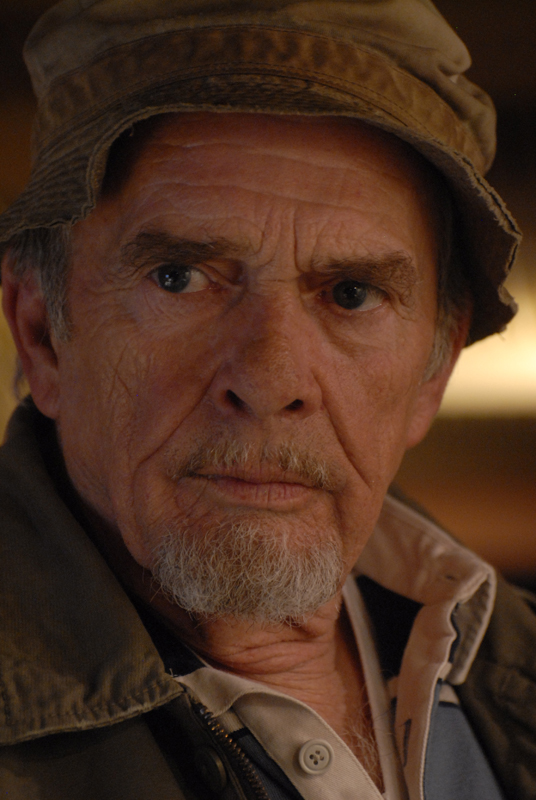
People often ask me, “How did you meet Merle Haggard?” This is how it happened:
Article and Photos by Doc Herndon
Many years ago I had a satellite practice in Chico that was limited to Advanced Periodontics, Dental Implants, Periodontal Prosthesis, and Advanced Reconstructive Dentistry. Merle was referred to a prosthodontist (a specialist in reconstructive dentistry) by his general dentist. In turn, the prosthodontist referred Merle to my practice in Chico. I was a founding member of the San Francisco Academy for Advanced Dental Education, which comprised many of the top specialists and dentists in the Bay Area. Among our members was the prosthodontist that Merle was referred to and he was familiar with both my training, experience in difficult reconstructive cases, and my background in professional music.
When he came to my office for the first time, I told him three things: 1) I can repair your foundational issues and construct esthetic and functional form and function with your teeth, 2) I can make you sound better, and 3) we will be friends for life. In the end, all three of those suggestions came true and the last one turned out to be a hoot!
There is a limit to what one can say about someone else’s treatment so I will let Merle tell it in his own words. From an interview in Road King magazine: “My mouth has to be shaped right so I can sing and sound like I did when I was young. They’ve made a lot of advances in the area of rebuilding people’s mouths, so I’m taking advantage of that.” And from the Wall Street Journal: “Now I have a complete mouth tuned by a dentist, Dr. Michael Herndon… who is a musician himself.”
Merle told me that he had multiple musicians and audio engineers ask him what happened because he sounded better than he had in 15 years; that I gave him his instrument back. This is how Merle and I became friends for life.
One day when we were in the middle of treatment he called me on the phone and said he did not want any gold in his mouth because it attracted mercury and while eating fish, it might pull the mercury out and injure him. I tried to tell him that was not the case but he got upset and hung up on me. I was naturally concerned and thought it a bit strange… kind of like yelling at your cardiologist just before a heart transplant or yelling at your neurologist just before a brain transplant.
That evening I was driving home in a big snowstorm and I stopped along the road, left the headlights on so I could see the falling snow, and called Merle. He answered and said “Hi Michael!” as if nothing had happened. I explained about gold, mercury in fish and such. and then he said “No worries… whatever you think is best is OK with me.” Then I asked him “Merle? Do you yell at all your friends?” He replied, “Michael, I don’t have a friend I haven’t yelled at one time or another. That way when they say they love you, you know they mean it.” I waited a moment and then said, “Merle?” He said, “What?” and I said, “I love you, Merle.” He laughed and said, “I love you too, Michael.” And that was the last and only time we had an issue. All the rest was astoundingly fun.
Legendary singer/songwriter Paul Anka, who heard me performing in Sun Valley, Idaho, became my producer and manager in the mid 70’s and I signed a contract with United Artists Records (UA) as a singer/songwriter, guitar player. This opened a lot of doors (while it lasted) and I met a lot of well-known folks; most were great and some were not so great. Because of this, Merle and I had some mutual friends in the music business and we developed a closeness that might not have been there otherwise since we could relate on more than a professional level.
Many people that acquire fame know who they are but seem to have forgotten or don’t know who they aren’t. Merle was one of those rare individuals that knows who they are but are also keenly aware of who they aren’t and that is part of what made him the champion of the Workin’ Man. He never forgot his roots nor thought he was better than others. He was indeed the man everyone thought he was, including being quite the character.
Paul Anka brought in well known bassist Leland Sklar to record with me on a record I was doing for UA (which never got published) and Lee and I have been friends ever since. Merle was set to record an album in Burbank in Mike Post’s studio that Lee was going to play on so Merle invited me down to hang out while this was going on. I knew that watching a recording process, when not involved, is kind of like watching paint dry but I wasn’t going to miss out.
A kind of funny conversation between Mike and Merle happened when Mike, Merle, Merle’s manager Frank, and I were standing in the studio after everyone else had left. Mike Post wrote the music for many TV shows including Hill Street Blues and thus did very well financially. Merle said to Mike, “I had the opportunity to write music for some shows but I turned it down and I wish I hadn’t.” and Mike said, “I wish I had been more in the public as a performer.” And Merle’s manager turned to me and said dryly, “Merle wishes he had more money and Mike wishes he was famous.” We all started laughing. Like Gary Larson says, The grass is greener on the other side.
After the session ended one day, Merle and I were riding down the freeway in his bus. We were sitting at the dining table and Merle said to me “Michael, I think I am running dry.” I asked him what he was referring to and he said he hadn’t written any songs for a while and thought it was over. As a songwriter

myself I knew the feeling. I reminded him that during spells of void it does make one wonder if the well has run dry. Pretty soon Merle was writing again. This was a reminder that even those with brilliant skills can struggle and have fears now and then just like the rest of us.
One time when Merle was up in Quincy, I drove him out to my home. The roads were covered in new snow and driving in such conditions has always been fun for me. As we were going along with the headlights leading the way Merle calmly says to me “Is there any reason we are going faster than we want to go?” Naturally I slowed down but that made me laugh. The understatement was superb and Merle often quipped short statements that said lots with few words. Merle told me one time; “I went to a dentist that was so bad I didn’t complain.” He was a master at understatement and you never knew what he was going to say next.
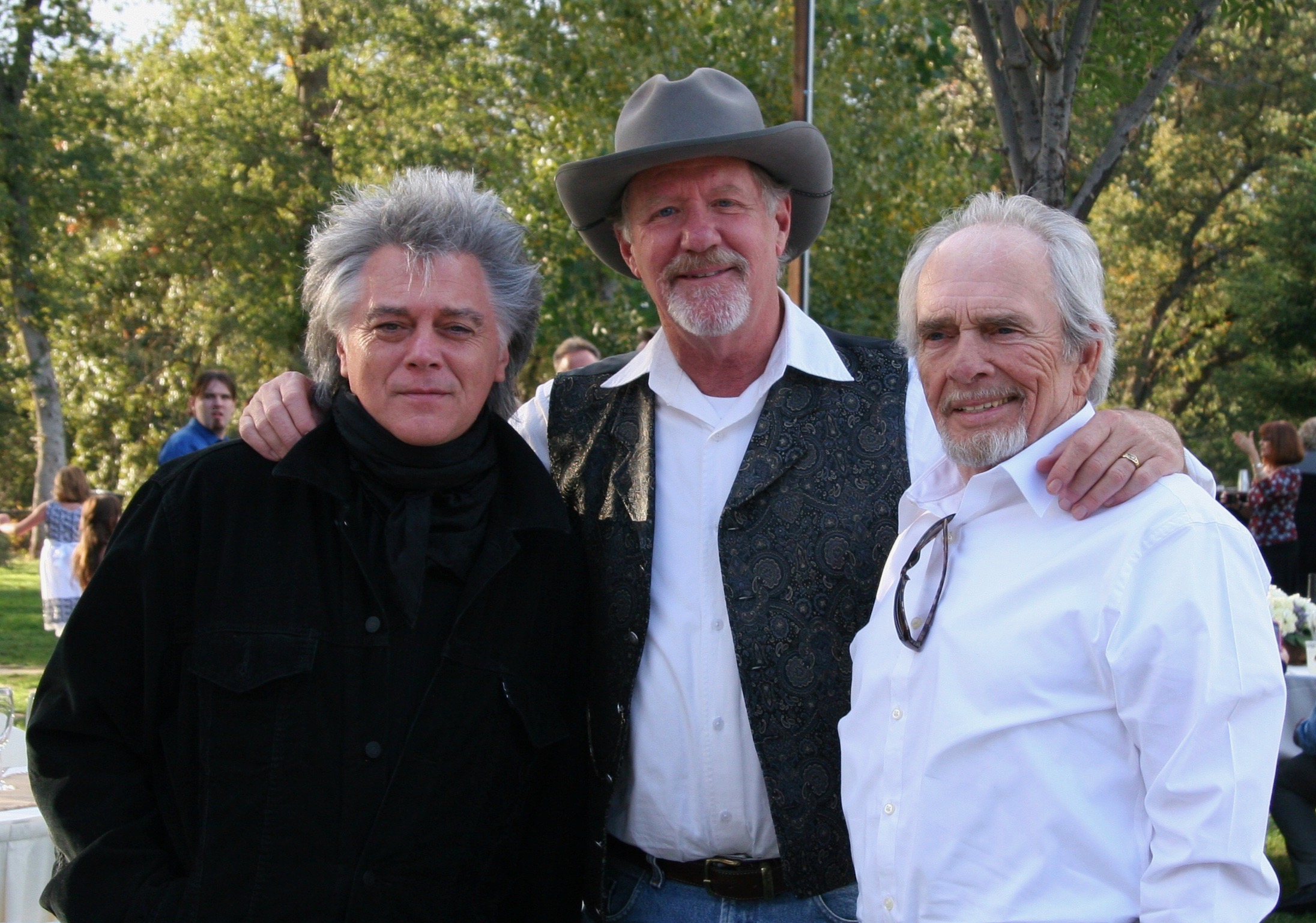
To relate another fine story, I was in the control room in Merle’s studio with Lou Bradly, Merle’s engineer, while Merle and the band were recording some songs. When a break came, Merle looked through the window between the control room and the studio room and said “Michael, go get your guitar. We need an acoustic guitar player.” So I got up, a little nervous, and went out, brought my guitar and entered the studio. There was a chair and a microphone set up for me next to Scott Joss, Merle’s fiddle player, and one of the finest individuals I have ever met. Scott told me the song was in the key of D and to provide something different, I tuned to an open D tuning. I figured we would run the song a few times and then record because I didn’t even know what song it was and no one told me.
Then Merle said to Lou “OK, Lou… Let’s do it.” And we were off recording. The song turned out to be Ramblin’ Fever which worked really well with an open tuning. It was pretty easy to figure out the changes as the song went
along so it all went well and was a lot of fun. Then we went on to record some other songs and it was quite a kick to record with Merle and the band. We later took a break, went to lunch in his house, and as Merle and I were walking together I mentioned that I could have done a better job if I had known what songs we were going to record and if I had been able to learn them ahead of time. He looked at me and said, “I wanted to see how you would do under pressure.” Yeah, that was a bit of pressure all right…
Once I was telling Merle a story about a project I was working on and I said that if I were a better player, I would have finished it a lot quicker. His response? “Do you know how many people wish they could play as good as you?” I never thought of it that way but rather how I wanted to be as good as someone I admired. Merle turned it around in such a gracious and generous way, which is one more example, among many, that showcases his humanity and benevolence.
When I was getting ready to record my album The Spirit of the Sun, I mentioned it to Merle and he said, “Anything I can do to help.” So I asked him if he would sing with me on a couple of songs. We were sitting outside on his deck with Lou Bradley and we had been playing guitars together and swapping songs. So I played the ones I was thinking of having him sing on and he agreed to my proposal. In the end, he only did one of them, a song about the Pony Express called Just Do It. Later his band members told me that they were amazed he did that with me because he was asked many times to sing with known artists and he usually turned them down. I’m nobody in the music world yet this is how down to earth Merle was.
Once Merle was offered 4 million dollars to do four 1hr long concerts in Sweden. The catch was, Merle had to do them solo with only him and a guitar. He asked me if he should do it and since he always performed with his band, he was hesitant. So I told him two things: 1) At this point in your life you can do no wrong. Even if you make mistakes the audience will love it and maybe even more. They want this to be very personal, and 2) “I’ll come with you and play for 20 minutes of that hour so you only have to do 40. You just give me one of them million dollars and we got a deal.” followed by laughter…
The stories above are to give a glimpse into what Merle Haggard was like on a personal basis. It was a privilege to know and spend professional and casual time with him and certainly one of the highlights of my life on so many different levels. He was the poet of the working man, kind, fun, direct when needed, told it like he saw it from his heart and mind, a great guitar player, amazing songwriter and generous sometimes to a fault to those around him, wonderfully witty, and on and on we can go. One time he said to me, regarding his success, “I just got lucky.” It was a lot more than that yet that shows how comfortable he was with himself.
Merle said he liked country music best with the “warts and moles” on it, meaning authentic, not over produced, and not corrected digitally to absurd perfection. I would submit that Merle was an individual with those same “warts and moles” and that made him the authentic man and music warrior that he was.
As far as I can tell, Merle had 38 number one hits, made 72 studio albums, had 6 Gold records, and 5 Platinum records. He received 21 country music awards, 4 Grammys; he was inducted into the Country Music Hall of Fame, Nashville
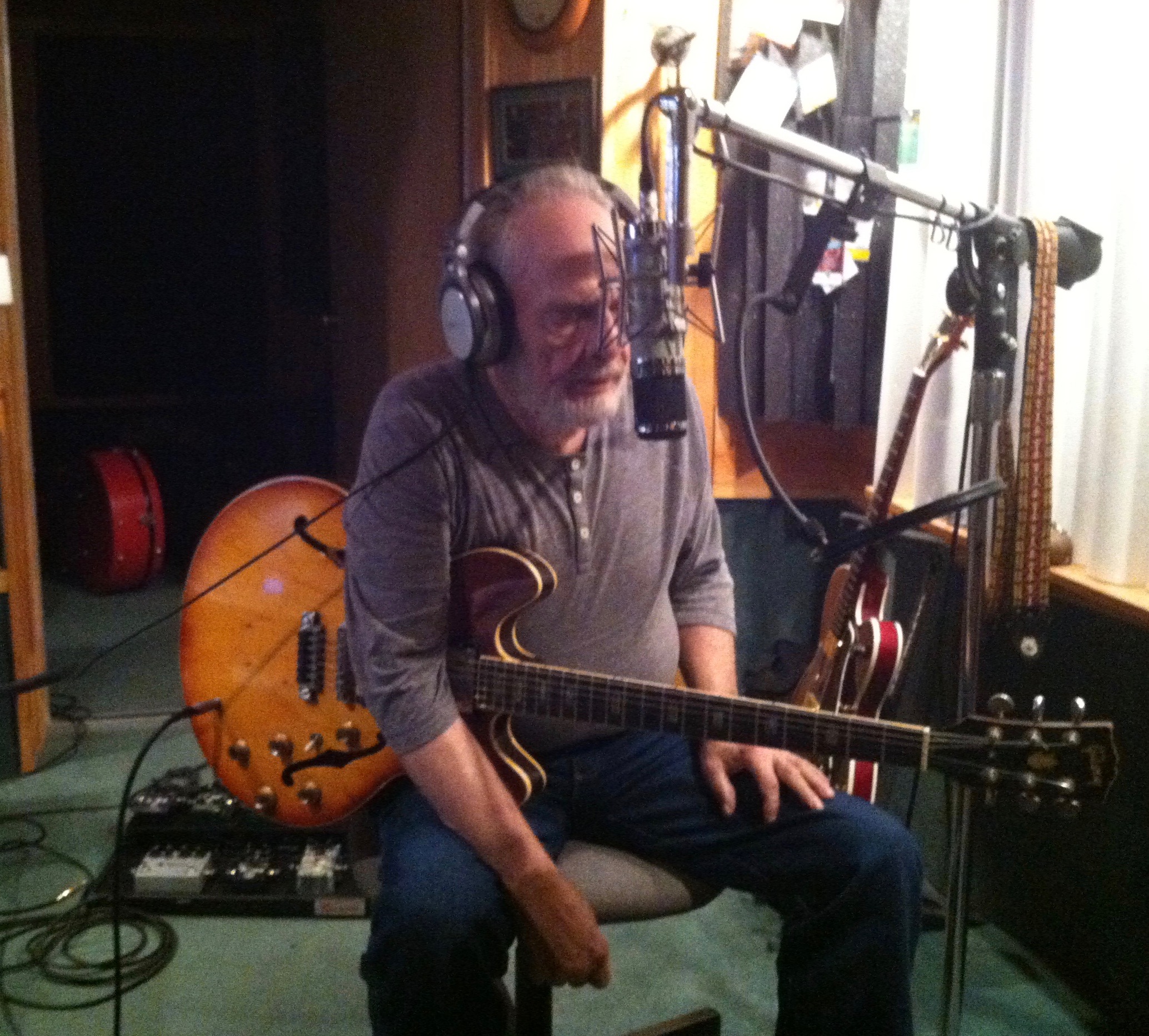
Songwriters Hall of Fame, and the Oklahoma Music Hall of Fame. He was honored at the Kennedy Center in 2010.
Merle was 79 years old when he passed on his birthday. April 6 1937 – April 6 2016.
I love him and miss him yet I am only one among many. His legacy will surely endure throughout time. What a character he was!
To hear the song “Just Do It”, search YouTube for Leland Sklar / Michael W. Herndon