By Debbie Michelle Jennings
If you love organizing artifacts, digitizing old records from yearbooks to newspapers, doing various kinds of research from poring through history books to laboring over detailed Google searches, recording oral interviews, trolling eBay for fun finds, and perhaps even engaging the interest of upper elementary school students on a museum field trip, then being a museum docent may be the volunteer position for you. And if you love all things Westwood, California, especially its rich history, live in town or nearby, and are looking for a volunteer gig, then being a docent at the Westwood Museum seems ideally suited for you.
The current seven docents at the Westwood Museum do all those tasks and more, and the volunteering fits well into their lifestyles because they each volunteer one day a week. I sat down with a few of them this spring, as well as the museum’s board president, and saw their passion for their mountain town—the true town that Paul (Bunyan) built, they said—and what they do to promote it as they curate its history.
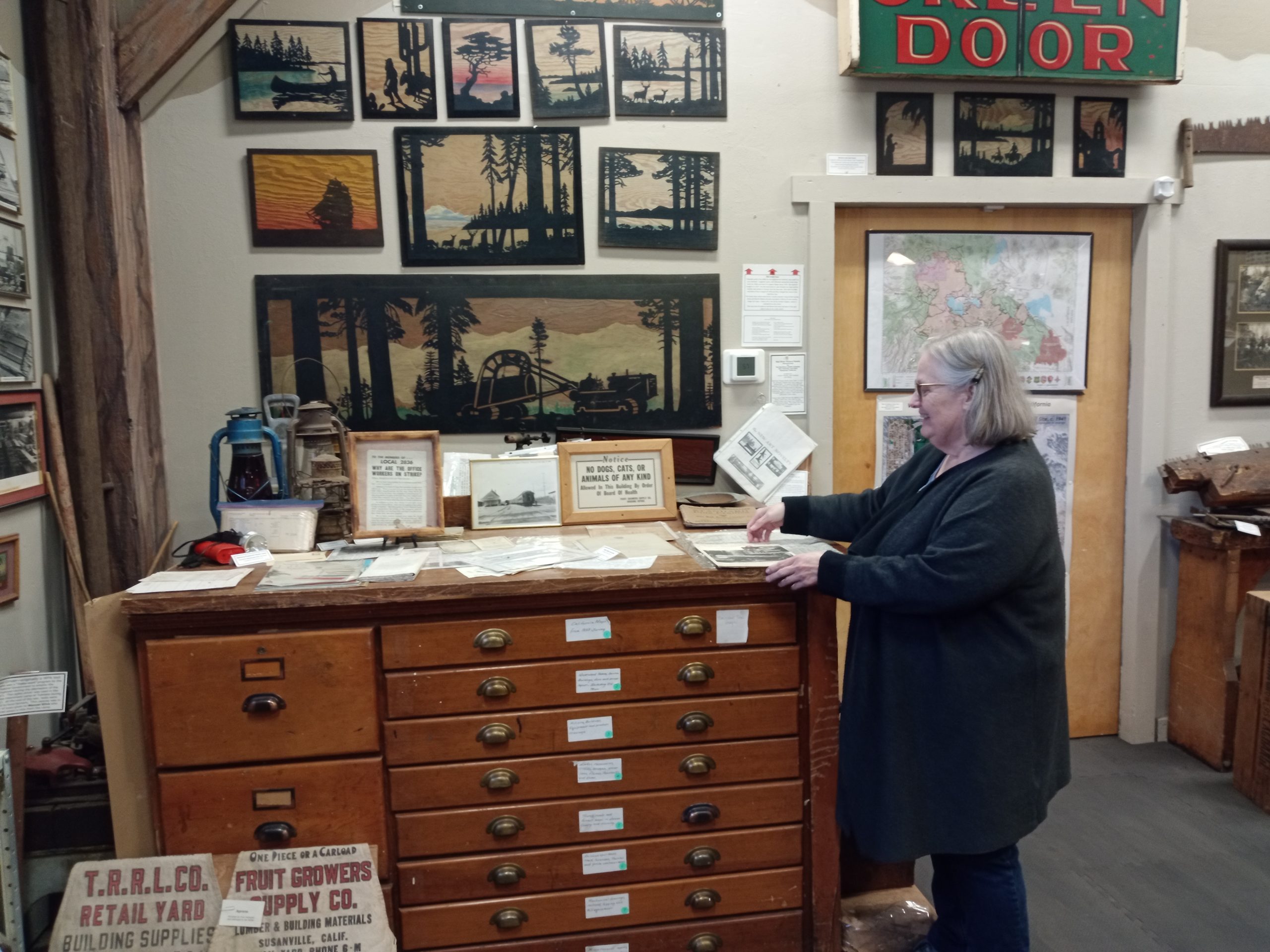
“Each of us always has a project we’re working on,” said head docent Pat Church, a retired Westwood School teacher. For example, in May one of the docents was working on updating records from Westwood’s cemetery.
These custodians of Westwood’s history treasure the town’s past, but the fun is in the sharing it with others. “We love interfacing with the people who used to live here,” said Church.
The museum’s visitors are primarily out-of-town guests with some type of connection to Westwood, such as a relative who lives there now or did in the past or where the visitors themselves once lived. Si Bollinger, the museum board president and a former deputy sheriff, described how the memories will flood back to former Westwood residents who have returned. “We get people from all over the world,” added Debbie Christie, a docent as well as treasurer of the museum board. She said she hears lines such as, “I remember visiting my grandparents here as a kid” and “It was a fun place to live.”
Armand Carrera, the museum’s newest docent, said that there used to be a lot to do in Westwood. The town now has fewer than 1,500 residents, but in its heyday, when the lumber mill was in operation, it had more than 8,000 and featured a movie theater, a roller skating rink, and even an opera house, where entertainment took place, though oddly enough, not any opera shows. The houses in town were only for married couples and families, so the single men lived in boarding houses, which used to line Birch Street. These bachelors came to the mill cafeteria, which long ago shut down, but part of it is today the museum’s rented space.
The museum’s collection began in July 1992 at the Westwood Community Center with artifacts town residents provided. The items were displayed during the town’s first Paul Bunyan Mountain festival, now held every July. The display moved to at least one other location before it made its way to its current home at 311 Ash Street. It is primarily funded by donations, memberships, merchandise sales, and an annual bake sale. The museum buys some items, but most are acquired as donations from current or former residents. After the museum opened, Christie said, “People came out of the woodwork to donate items.” One time outside the museum door they found a high school band megaphone with a big W emblazed on it.
“Most of this stuff is one-of-a-kind, irreplaceable,” Christie said. “If it’s gone, it’s gone.” Church added that if you have an item that might be something to donate, but you’re not sure, bring it to the museum. “Don’t throw it away,” she said. The docents have a history form they ask donors to fill out to record any information about the item that the donor knows about related to its origin and use.
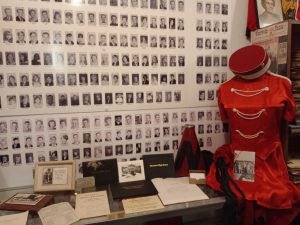
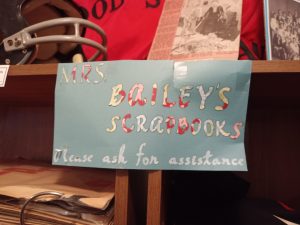
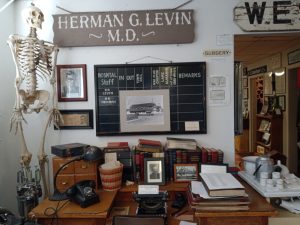
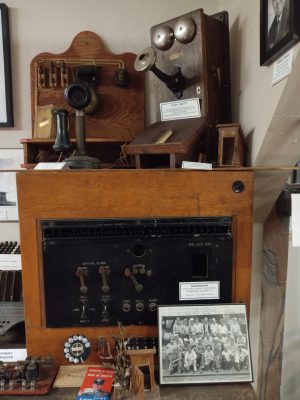
The museum is organized in sections, with the front room depicting the town during its early days as a company town with the Walker family, who had come from Minnesota in 1912, at the helm of the Red River Lumber Company. The middle room focuses on the people of Westwood over the years, dating back to the town’s first graduating class of 1919. Every yearbook since is there, as are newspapers going just as far back and some even farther. The museum’s back room captures the history of the mill and facts and finds related to the woods surrounding the town.
“This is a great place for history research,” said Christie.
The museum is open Wednesday through Saturday, from mid-May through the end of September. However, if you’ll be in from out of town Sunday through Tuesday, call the museum at (530) 256-2233 and they can schedule an appointment to open it up for you. If you would like to be added to the mailing list for the museum’s newsletter, find the museum on Facebook or reach out via email at westwoodmuseum@gmail.com.
“Come and visit us,” Church wanted me to tell you. “We love visitors.”