
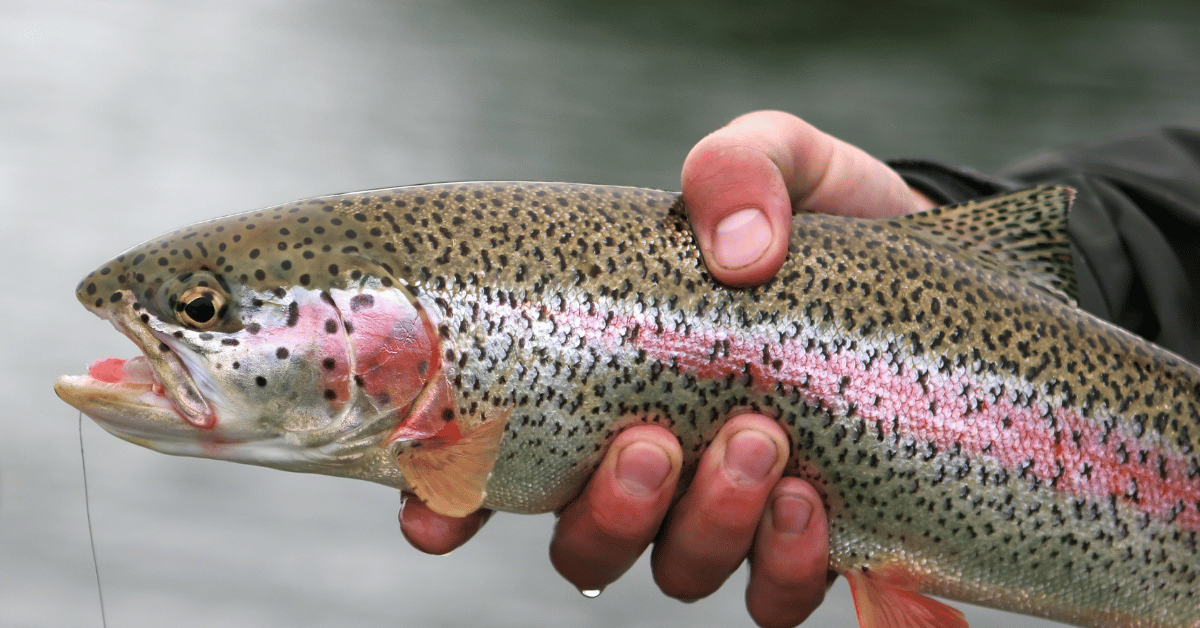
Smoked Trout: The Catch
Some links in this article are Amazon affiliate links. As an Amazon Associate, I earn from qualifying purchases. If you choose to buy through these links, I may receive a small commission at no extra cost to you.
There’s a certain kind of quiet that settles over Lake Almanor just after sunrise.
You feel it standing on the shoreline — boots on cold rock, pine needles underfoot, breath hanging in the air. Across the water, near Chester, the first light starts to slide over the trees. The lake stays still. Wide. Patient.
You make the cast from shore.
The line cuts a clean arc against the morning sky. The casting bubble lands thirty yards out with a soft pop. Then you wait.
No engine noise. No drifting hull. Just you, the bank, and a line stretched across open water.
The casting bubble rocks once. Then twice. 
Then it slides sideways and disappears below the surface.
That’s the moment.
Not the hook set. Not the photo. The disappearance. The split second when something beneath the surface commits, and everything above the surface responds.
You lift the rod. The line goes tight. The trout runs hard, pulling against the steady resistance of the shore.
From the bank, every run feels stronger. Every surge feels personal. You’re grounded. The fish has nowhere to hide except depth.
Cold water. Flash of silver. The steady work of guiding it in. Most people think the reward is the catch. It isn’t. The reward comes later — back home, when that trout from the clear waters of Plumas County becomes smoked trout done right.
Catching it takes skill.
Turning it into something worth remembering takes discipline.
The Smoked Trout Brine Recipe That Holds Up
There are complicated brines. And then there are brines that work. This one works.
It’s built around Morton Sugar Cure — simple, reliable, consistent. Add fresh garlic if you have it. Garlic powder if you don’t. A touch of sweet basil. Warm water to dissolve everything clean.
That’s your base. You’re not building a marinade. You’re building structure.
Two gallons of warm water. One and a half cups of cure. Stir until fully dissolved. Taste it. It should register salty — but not aggressive. If it hits too hard, dilute slightly. The brine should season the fish, not shock it.
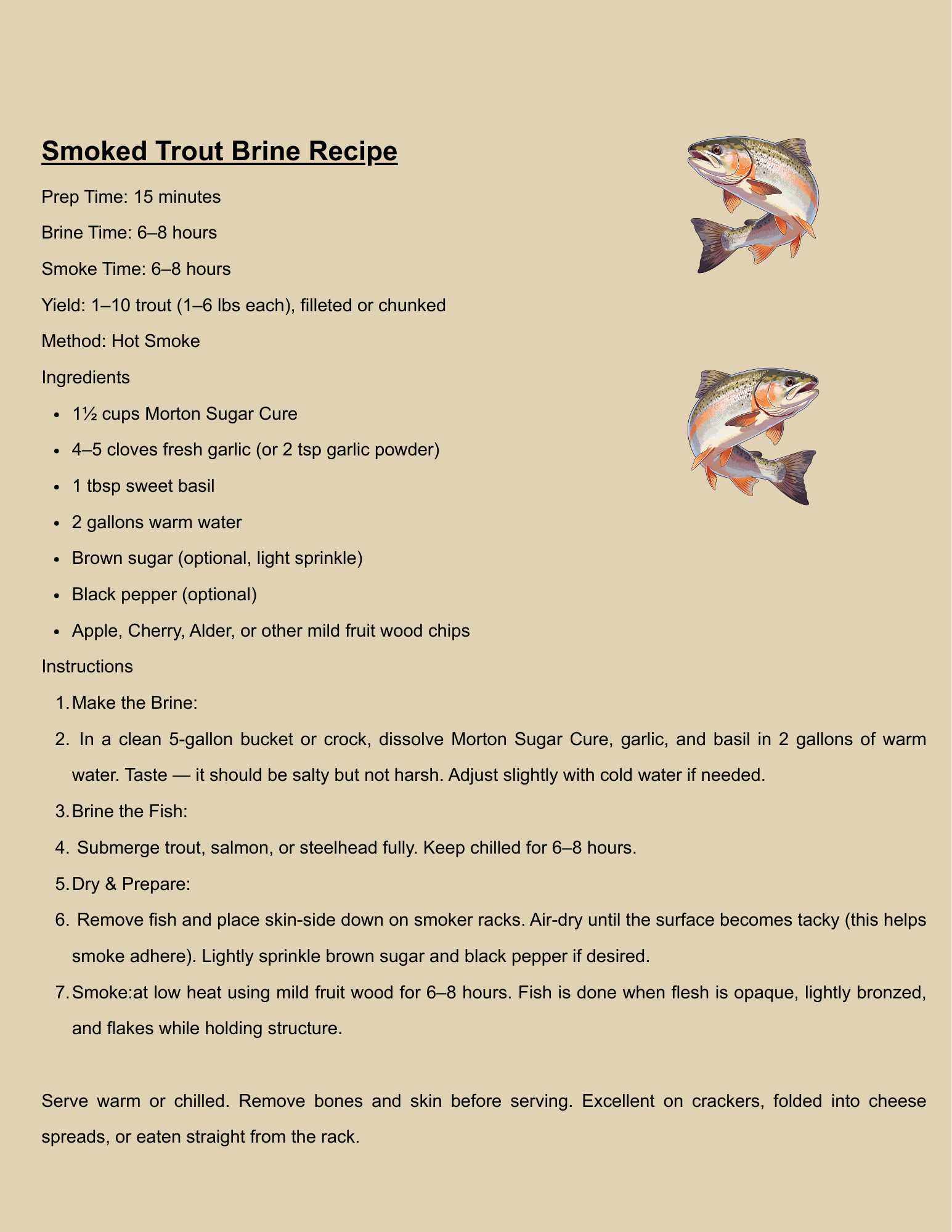
Click the image to download our Smoked Trout Recipe
Whether you’re working with trout, salmon, or steelhead — filleted or chunked — submerge the fish fully. Six to eight hours in the brine, chilled. That window gives you firmness without tightening the flesh.
After that, the real shift happens.
Remove the fish. Lay it skin side down on the racks. Let air do its work. The surface should dry and turn slightly tacky. That’s the pellicle forming. That’s what allows smoke to adhere with depth.
At this stage, you can dust a light layer of brown sugar over the fillets. Not enough to coat. Just enough to round the edges. It adds a mild sweetness that plays well against the salt and smoke.
Next is the smoker (Table Top Smoker from Amazon). Then comes the wood.
Apple. Cherry. Alder. Fruit woods that complement instead of dominate. You’re not trying to bury trout under smoke. You’re trying to frame it.
Six to eight hours in steady heat. Light smoke. No rushing.
When it’s done, the flesh should hold but flake clean. Oils should rise to the surface. The color should deepen without drying.
You can strip the bones and skin clean. Fold it into a cheese roll. Lay it over a cracker. Or eat it straight from the rack with a cold beer in hand.
No garnish required.
This isn’t delicate restaurant food.
It’s smoked trout done right.
How to Serve and Store Smoked Trout
Smoked trout should stand on its own.
If the brine was balanced and the smoke was controlled, it doesn’t need help. Warm off the rack, it should flake in firm pieces, not crumble. The oils should sit lightly on the surface. That’s when it’s cleanest — before refrigeration tightens it, before anything else gets added.
You can eat it as it is. Pull the bones. Peel the skin. Break it into thick flakes and let the smoke carry through. A squeeze of lemon if you want contrast, but nothing that buries the flavor. When trout is done right, simplicity wins.
If you’re building it into something larger, keep the structure intact. Fold it into cream cheese for a spread that holds texture. Layer it over eggs without shredding it thin. Press it into a cheese roll or lay it on a cracker without overworking it. Smoked trout handles well when you let it remain trout.
And when it comes to storage, air is the enemy. Seal it tight and refrigerate for up to a week. Vacuum sealing extends that window. Freeze it properly and it keeps its structure. Thaw it slow, not fast. Respect the texture on the way out the same way you respected it on the way in.
Smoked trout rewards restraint — even after it leaves the smoker.