
By Jim Moore
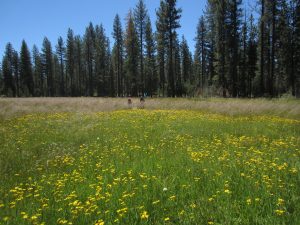
There is an isolated often visited system of small mountain meadows, surrounded by tall pines, in Lassen County that change color throughout the season as different wildflowers come to bloom, each dominating with their own separate seasonal show of color. First there is low growing early spring yellow buttercups, then Blue Camas, the white American Bistort, and other different colorful wildflower species, often occurring only in one of the associated meadows, or mixed and blooming together.
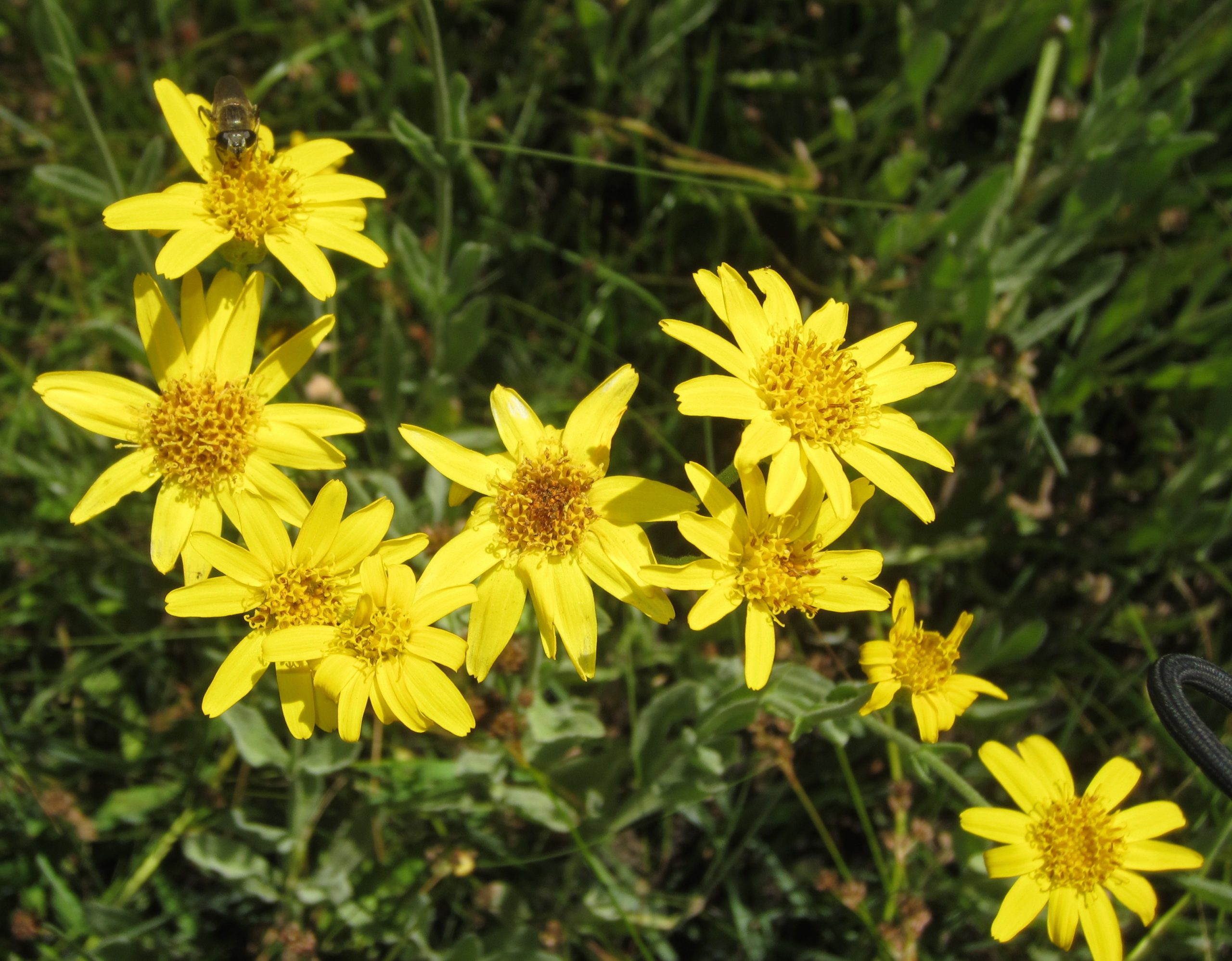
During another visit last summer, along with my two young granddaughters, we came across a large show of yellow daisy-like wildflowers. For some reason I could not remember seeing such a large spread of these unfamiliar wild flowers growing in that location before. Perhaps previously my time of visiting was before or after the blooming of this flower. But now, certainly a reason why these meadows call on me to visit often, was to finally introduce me to another wonderful life-form, always there, and now begging for my first face to face acquaintance: the Cordillerian Arnica wildflower (species Arnica mollis). Our visit to these meadows was in mid July, and this section was still quite marshy wet, whereas in seasons past it would have been dry by then. But the deep snow of the previous winter melted slowly, and set the stage for a later bloom for all the wild flowers, and this new wildflower encounter.
The Cordillerian Arnica wildflower is a common and widespread higher elevation alpine, and subalpine mountain species found throughout the Western United States and Canada, ranging from Alaska to California primarily within the Cascades, Sierras, Rocky Mountains, and Coastal Ranges. The name Cordillerian speaks of its distribution within these long parallel mountain ranges; within which it favors cool wet meadows, fens, and stream side habitats. It is a hardy slow growing perennial species within the sunflower family. The foliage is lightly hairy or fuzzy; and is thus also commonly called the Hairy Arnica or Soft Arnica. As some folks know, the flower-heads of some Arnica species have been historically used to make an external-use oil or cream to assist in muscle and joint pain relief.
The Arnica plants were most dense within the mid-meadow where the ground was more wet, or even underwater a bit. Towards less wet ground, closer to where the meadow and the woods mingled together the Arnica plants were much more spread apart. In another section of the meadow the Arnica flowers were densely mixed with White Brodiaea flowers. Butterflies, bees, bumblebees, and other pollinators were making the rounds flower to flower; but not in abundance.
After taking some photos, I noticed that my granddaughters had migrated to a drier more grassy section of the meadow where grasshoppers were more abundant and easier to catch with their small bug nets; so I followed along, keeping an eye out for close encounters with some other new living wonder. And there it was: another story yet to be written!